
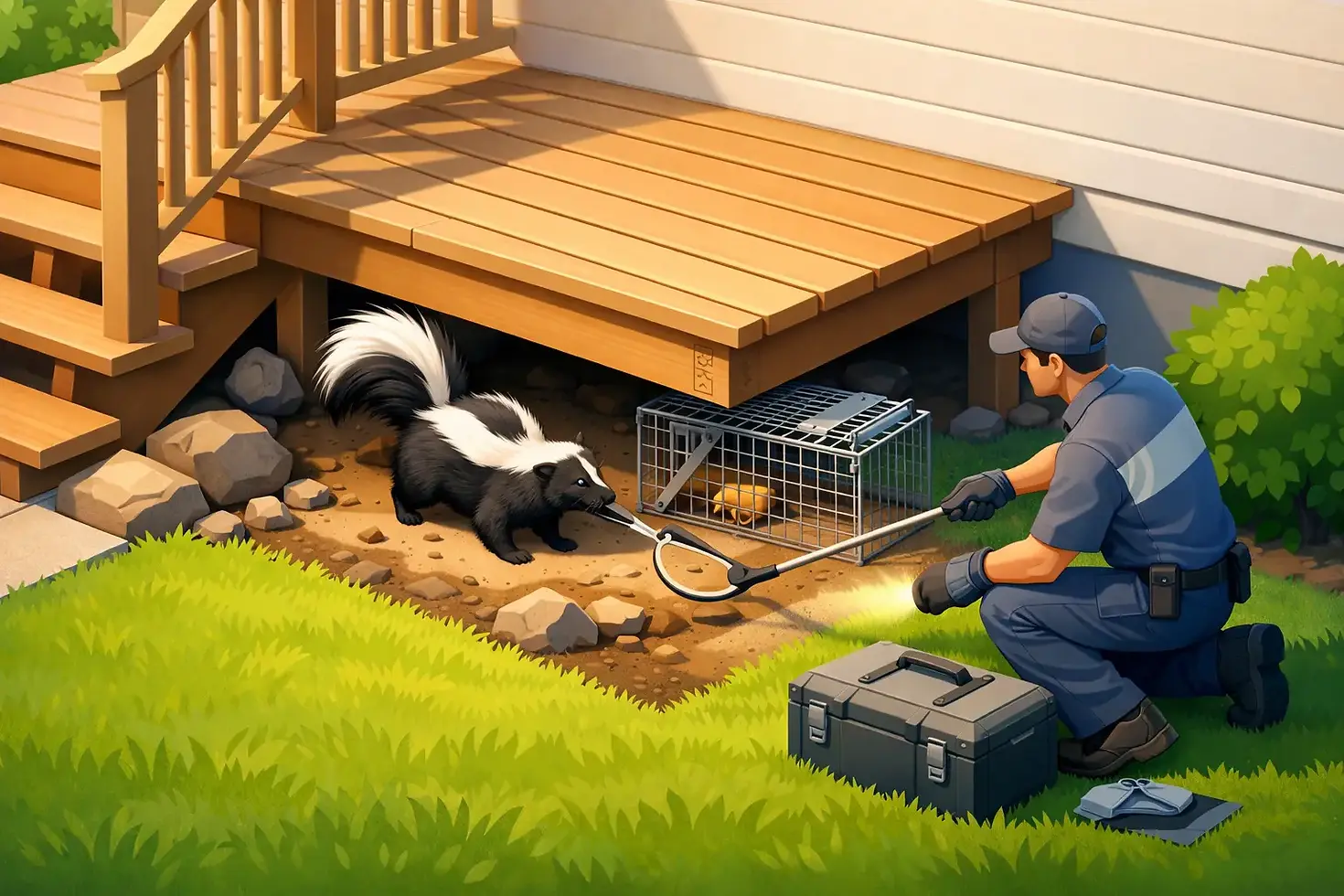
Professional Skunk Under Deck Removal That Lasts
A skunk under a deck can turn a quiet backyard into a daily source of worry. The smell is the obvious problem, but it is rarely the only one. A protected space beneath a deck can become a den, especially when the area is dry, shaded, and easy to enter. Professional skunk under deck removal addresses the animal already there while making sure the same opening does not invite the next one in.
For Massachusetts homeowners, the right response depends on the season, whether young may be present, and how the skunk is using the space. Rushing to seal an opening or trying to scare the animal away can create a bigger problem for your household and for the animal. A humane, carefully planned eviction gives everyone a safer way forward.
How to Tell if a Skunk Is Living Under Your Deck
Skunks are mostly active at dusk and overnight, so you may never see the animal directly. Often, the first evidence is a musky odor near the deck, foundation, or basement windows. The odor may become stronger after a dog investigates the area or when a skunk feels cornered.
Look for a shallow, rounded entrance along the deck perimeter, usually where lattice, soil, or loose skirting has created a gap. Freshly disturbed dirt, small claw marks, flattened grass, and a noticeable path leading to the opening are useful clues. You may also find insects disturbed in the lawn, since skunks feed on grubs and other ground-dwelling insects.
Not every animal under a deck is a skunk. Opossums, woodchucks, feral cats, and raccoons can use similar spaces, but the removal approach changes by species. An accurate inspection matters because an incorrect trap placement, exclusion device, or closure plan can leave an animal trapped beneath the deck or damage the structure.
Why a Skunk Den Needs More Than a Quick Fix
A skunk does not have to enter your home to create a household problem. A family pet that gets sprayed may need repeated baths, veterinary guidance if spray contacts the eyes, and a careful cleanup of collars, leashes, doorways, and outdoor furniture. The odor can travel into lower-level rooms through open windows, gaps around utilities, or air-handling equipment.
There are also health and sanitation concerns. Skunks can carry parasites and may be associated with diseases that require caution around wildlife. No homeowner should handle a sick, injured, unusually tame, or dead skunk without professional direction. Keep children and pets away from the den entrance, and avoid leaving food, birdseed, unsecured trash, or pet bowls outdoors overnight.
The greatest long-term risk is repeat access. If the skunk got under the deck through damaged lattice, an unprotected gap, or soft soil at the edge of the structure, another animal can use the same route later. A trap alone may remove one animal, but it does not correct the condition that made the deck attractive in the first place.
The Right Time for Skunk Under Deck Removal
Timing is critical when a female skunk may have young in the den. In Massachusetts, skunk activity around dens can increase in late winter and spring, and babies may remain dependent on their mother for a period of time. Sealing the entrance while young are still beneath the deck can separate them from the mother. That can lead to persistent scratching or crying sounds, odor from animals that cannot leave, and a difficult welfare issue.
This does not mean a homeowner has to live with the problem indefinitely. It means the removal plan should be based on what is happening below the deck. A professional inspection can determine whether the den is active, whether there are signs of young, and whether a one-way exit can be used safely. In some cases, monitoring and timing are the most humane and effective choices.
A Five-Step Humane Removal Process
1. Consultation and property assessment
The process begins with the details you have noticed: when the odor began, where you have seen activity, whether a pet has been sprayed, and whether the deck has had wildlife problems before. These observations help focus the inspection and identify immediate safety concerns.
2. Inspection of the deck and surrounding area
A proper inspection checks the deck perimeter, lattice, stairs, foundation edge, utility lines, nearby sheds, and landscaping. The goal is to identify the animal, locate every possible entry point, and evaluate whether the den may contain young. It also reveals conditions that attract skunks, such as accessible garbage, fallen fruit, exposed compost, or grub-heavy turf.
3. Humane removal or one-way eviction
When conditions allow, a one-way exclusion device can let a skunk leave the den without allowing it to return. This is often preferable to simply blocking the opening, because the animal can exit on its own terms and the deck can be monitored for activity. If capture is necessary, it should be handled with the right equipment, placement, and knowledge of local wildlife requirements.
Home remedies such as mothballs, ammonia-soaked rags, flooding the den, loud music, or firecrackers are not reliable solutions. They can expose people and pets to hazards, cause property damage, or force a frightened animal deeper under the structure. They can also create an avoidable spray incident.
4. Repair and exclusion after the den is clear
Once the area is confirmed clear, the deck should be secured with durable barriers designed for wildlife pressure. Depending on the structure, that may include repairing lattice, closing gaps around stairs, reinforcing weak sections, and installing an underground barrier to discourage digging. The materials and depth should fit the deck design, soil conditions, and the species involved.
This step is where a temporary removal becomes a lasting property-protection solution. The objective is not to make the deck look sealed for a week. It is to prevent skunks, woodchucks, and other digging animals from reopening the same access point.
5. Cleanup, prevention, and follow-up guidance
The final stage addresses the conditions that can bring wildlife back. A homeowner may need to secure trash containers, remove outdoor pet food, clean up spilled birdseed, protect compost, or adjust landscaping near the deck. If a pet was sprayed, keep it away from the den area while the removal work is underway.
Harvey's Animal Evictions LLC approaches this work as a complete eviction-and-prevention service: inspect the cause, remove the animal humanely, repair vulnerable areas, and help protect the property from another intrusion.
What Homeowners Can Do While Waiting for Help
Give the den entrance space. Do not crouch near the opening, shine a flashlight inside, or let a dog pull toward it on a leash. A skunk usually prefers to avoid people, but it may spray when it feels trapped or threatened.
Keep pets supervised after dark and use a leash for nighttime bathroom breaks. If you suspect a skunk is beneath the deck, choose a different route through the yard rather than walking directly past the entrance. Close garage doors, remove food sources, and make sure trash lids fit tightly.
If you see a skunk acting disoriented, aggressive, unable to walk normally, or active in an unusual way, do not attempt removal yourself. Maintain distance and seek professional assistance. The same caution applies if you smell a dead animal under the deck, since locating and removing it without disturbing the structure may require specialized access and sanitation work.
Prevention Starts at the Deck Edge
Deck skirting is often treated as decorative, but it is also part of your wildlife defense. Even a small opening can become an invitation when a skunk finds dry cover beneath the boards. Regularly check for loose lattice, eroded soil, gaps around posts, and openings created by seasonal ground movement.
It also helps to make the yard less rewarding. Grub control, where appropriate for your lawn, can reduce one food source. Covered garbage, tidy compost, and the removal of fallen fruit reduce others. These changes will not replace exclusion, but they make your property less appealing after the deck has been secured.
A skunk beneath a deck is stressful, particularly when pets and family members use the yard every day. With a humane removal plan and durable exclusion work, your deck can return to being an outdoor living space instead of a wildlife den.


Comments