
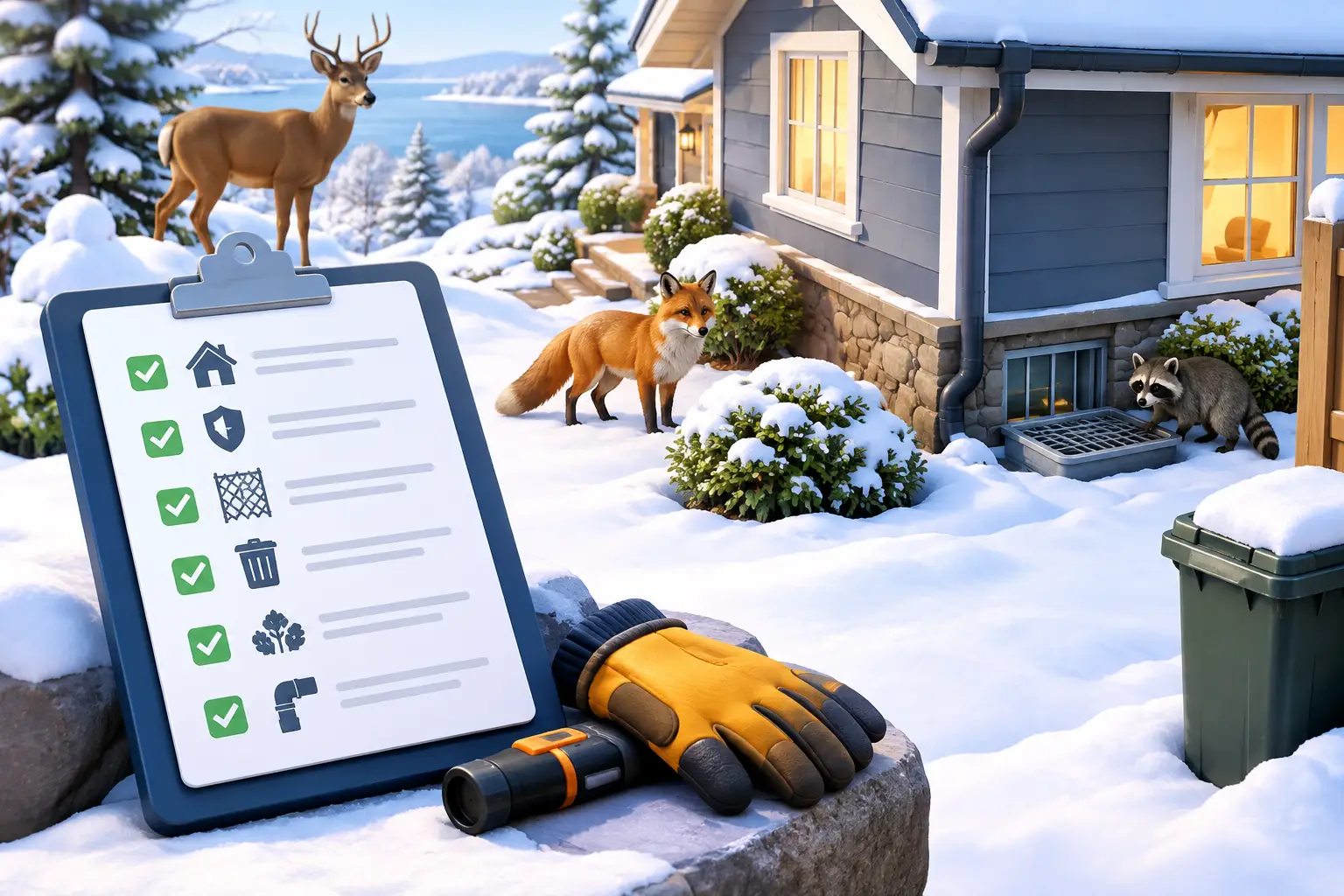
Winter Wildlife Prevention Checklist for Massachusetts
The first hard freeze changes how wildlife uses your property. A squirrel that stayed in the yard all summer may search for an attic opening. A raccoon may investigate a loose roof vent, while skunks and opossums look for dry shelter beneath a deck or porch. This winter wildlife prevention checklist helps Massachusetts property owners find and address those vulnerabilities before a small opening becomes a noisy, damaging indoor wildlife problem.
Winter prevention is not about making your yard hostile to animals. It is about keeping wildlife outside, where it belongs, while protecting your home, family, pets, and building systems. A humane solution starts with identifying the species, confirming whether an animal is already inside, and closing access only when it is safe to do so.
Why Wildlife Problems Escalate in Winter
Cold weather reduces natural shelter options. Attics, crawl spaces, chimneys, sheds, garages, and the areas beneath decks offer warmth, cover, and protection from wind and snow. Once an animal gets in, it may tear insulation for nesting, leave droppings and urine, chew wiring, or damage ductwork and building materials.
The warning signs are often subtle at first. You may hear scratching above a ceiling before dawn, notice an unfamiliar odor near a wall, find soffit material on the ground, or see tracks leading beneath a deck. Raccoons can cause significant damage around rooflines and chimneys. Squirrels may enlarge a gap around fascia boards or vents. Skunks, woodchucks, and opossums often settle beneath low decks, steps, sheds, and additions.
Waiting can make a preventable issue more expensive. The right response depends on the animal, the location, the season, and whether young or multiple animals may be present. That is why exclusion work should never be treated as simply stuffing a hole with material.
Winter Wildlife Prevention Checklist for Your Property
Walk around your property during daylight, ideally after a light snowfall or rain. Tracks, disturbed soil, fresh debris, and staining are easier to spot when the ground provides contrast. Bring a flashlight for low areas, but avoid reaching into voids, vents, or openings where an animal could be sheltering.
Inspect the roofline and attic access points
Check roof vents, ridge vents, soffits, fascia boards, chimney flashing, and the edges where roofing meets walls. Look for bent vent covers, missing screens, gaps around utility lines, or wood that appears chewed or pulled apart. Squirrels, raccoons, birds, and bats can use very small weaknesses, especially where weather has loosened old materials.
Inside the attic, look from a safe distance for displaced insulation, droppings, nesting material, staining, or daylight showing through the roofline. Listen for movement rather than assuming a quiet attic is empty. Some animals are active at night, while others are most noticeable in early morning.
Protect chimneys, vents, and exterior openings
An uncapped chimney can be an attractive vertical shelter for raccoons, squirrels, and birds. A properly fitted chimney cap helps prevent entry while allowing smoke and gases to vent as intended. Damaged dryer vents, bathroom exhaust vents, and other exterior vent covers also deserve attention.
Do not cover or block a vent if you suspect an animal is inside. Trapping wildlife in a chimney, wall, or vent can lead to odor, damage, and a more difficult removal. A professional inspection can determine whether the opening is active and recommend an exclusion method that lets an animal leave without returning.
Check decks, porches, sheds, and crawl spaces
Look beneath decks, stair landings, porches, sheds, and additions for freshly moved leaves, burrowing, tracks, droppings, or soil pushed away from the structure. Skunks and opossums commonly use these protected spaces, while woodchucks may create larger burrows nearby. In some cases, a deck enclosure is the right long-term answer, but it should be installed after confirming the space is empty.
Pay attention to foundation vents, crawl-space doors, basement window wells, and gaps around pipes or utility conduits. A loose cover or damaged screen can become an easy entrance point. Moisture, damaged masonry, and settled soil can create new access routes that were not present last winter.
Remove easy food sources without changing your whole routine
Wildlife prevention works best when shelter and food are addressed together. Keep trash containers closed and secured, clean spilled birdseed, and avoid leaving pet food outdoors overnight. Pick up fallen fruit where applicable and keep compost properly managed.
Bird feeders do not always need to come down, but they may need to be relocated away from the house and cleaned beneath regularly. Seed on the ground can draw rodents, which may then attract other wildlife. The goal is not a perfect yard. It is reducing the easy rewards that encourage repeated visits near your home.
Watch for water and drainage issues
Standing water, clogged gutters, leaking outdoor faucets, and poor drainage can make a property more inviting and can worsen wildlife-related damage. Clear leaves from gutters and downspouts before freezing temperatures make the work harder. Direct runoff away from the foundation, and repair visible leaks around exterior fixtures when possible.
Water management also protects the home itself. Wet soil near a foundation can expose gaps, undermine screens, and create conditions that appeal to animals seeking cover. Near ponds, streams, culverts, and golf-course features, property owners may need species-specific guidance for muskrats, beavers, or other water-associated wildlife.
What to Do When You Find Signs of an Animal
If you find an opening with fresh marks, hear activity in the attic, or see an animal entering a structure, avoid sealing the opening immediately. Take note of the time of day, the location, and what you saw or heard. This information helps identify the likely species and whether the entry point is active.
Do not handle droppings, nesting materials, or a dead animal without appropriate protection. Contaminated areas can contain parasites, bacteria, or other health concerns. Keep children and pets away from the area, especially if there is a strong odor, visible waste, or an animal behaving unusually.
A professional wildlife response should address the full problem, not just the animal in view. Harvey's Animal Evictions begins by assessing the property and the evidence of activity, then develops a humane plan suited to the species and structure.
A Five-Step Response for Active Winter Wildlife
1. Consultation and observation
Describe the sounds, sightings, odors, and damaged areas you have noticed. Clear details help determine how quickly the situation needs attention and what areas should be inspected first.
2. Property inspection
A thorough inspection identifies the animal, likely travel routes, current entry points, and weaknesses that could become future entry points. It also documents damage to roofing, vents, insulation, decks, foundations, or other areas.
3. Humane removal or one-way exclusion
The removal method depends on the species and location. One-way exclusion devices can allow certain animals to exit while preventing re-entry. If capture is needed, it should be handled humanely and in accordance with applicable regulations.
4. Repair and secure the structure
After the animal is out, damaged entry points should be repaired with durable, wildlife-resistant materials. This may include securing vents, reinforcing vulnerable roofline areas, screening access beneath structures, or repairing chewed and displaced materials.
5. Cleanup and follow-up prevention
Nesting debris, droppings, contaminated insulation, and odor sources may require cleanup and sanitation. Follow-up guidance helps homeowners manage food sources, drainage, and seasonal maintenance so the same conditions do not invite another animal back.
Give Your Home a Head Start Before the Deep Cold
The best time to correct a loose vent cover or deck opening is before an animal turns it into a winter den. Start with the obvious exterior weak points, stay alert for new sounds and fresh damage, and treat active wildlife as a situation that deserves a careful, humane plan. A secure home gives you peace of mind through the coldest months while allowing local wildlife to remain safely outdoors.


Comments