
How to Remove Opossums Safely From Your Home
An opossum crossing the yard after dark is usually no cause for alarm. An opossum living under your deck, inside a crawl space, or near pet food is a different situation. Knowing how to remove opossums safely means protecting your household without harming an animal that is simply looking for warmth, food, or a sheltered place to rest.
Opossums are generally shy, solitary animals and would rather avoid people. Still, they can leave droppings, carry parasites, damage insulation, disturb pets, and create strong odors when they settle beneath a structure. The safest answer is not to corner, poison, or casually relocate the animal. It is to identify where it is staying, make sure no young are left behind, remove it humanely, and close off the conditions that invited it in.
Signs You Have an Opossum on the Property
Opossums are nocturnal, so homeowners often first notice activity after sunset. You may hear slow shuffling or scratching below a deck, porch, shed, or crawl space. Unlike squirrels, which are often active during the day, opossums tend to make their presence known at night.
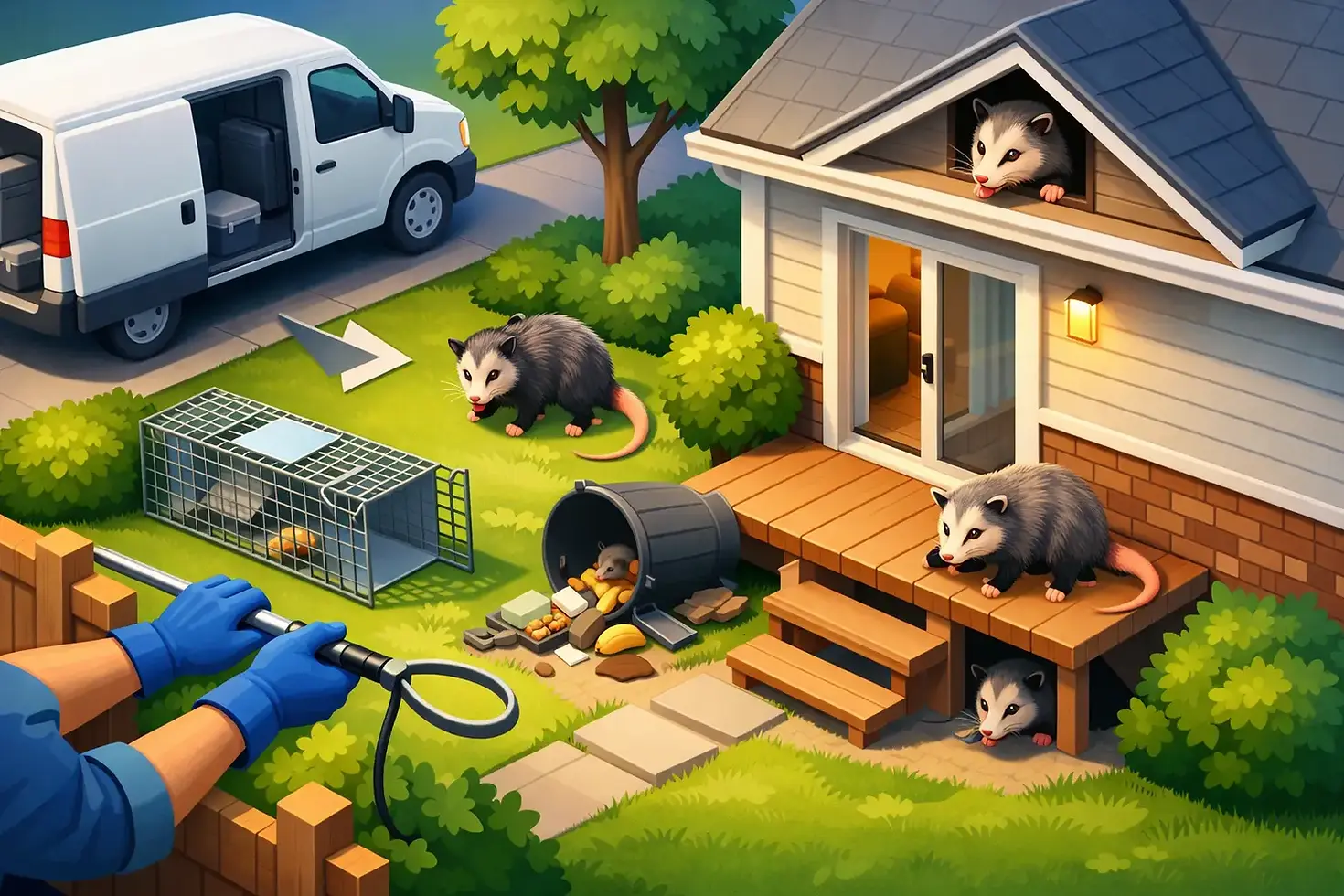
Other signs include overturned trash, scattered pet food, droppings near a sheltered opening, tracks in mud or snow, and a musky odor around the foundation. An opossum may also be seen entering a broken foundation vent, loose lattice, open garage, or gap beneath a shed.
A sighting alone does not always require removal. An animal passing through the yard may move on by morning. The concern rises when it repeatedly returns to the same access point, appears to be denning beneath a structure, or is creating a conflict with pets, sanitation, or property conditions.
Why DIY Opossum Removal Can Go Wrong
Opossums have a well-earned reputation for "playing dead" when frightened. This defensive response can make an animal look sick, injured, or deceased when it is actually stressed and waiting for danger to pass. Handling it at that point can lead to bites, scratches, parasite exposure, and a much more difficult removal.
There is another concern in spring and early summer. A female opossum may have babies in her pouch or young that remain in a nest site. Blocking an entrance without inspecting first can separate a mother from dependent young. That creates an animal welfare problem and can leave young animals behind to die, producing odor and sanitation issues inside the structure.
Homeowners should also avoid using poison, glue traps, or improvised methods meant to frighten an animal out. These approaches are inhumane, can endanger pets and other wildlife, and do nothing to repair the opening that allowed access. Even a successful trap-and-release effort often fails if food sources and entry points remain available.
How to Remove Opossums Safely: A Five-Step Process
A complete solution addresses both the animal and the property. Harvey's Animal Evictions approaches nuisance wildlife as an ethical eviction followed by practical prevention.
1. Start With a Careful Consultation
Begin by documenting what you have seen and where. Note the time of activity, the location of noises, visible gaps around the structure, and whether pets are reacting to one particular area. If possible, take photos from a safe distance without approaching or blocking the animal.
This information helps distinguish an opossum from a raccoon, skunk, squirrel, or other species that may require a different removal plan. It also helps determine whether the animal is likely passing through or has established a den site.
2. Inspect the Structure Before Closing Anything
A professional inspection looks beyond the obvious hole. The goal is to identify active entry points, weak materials, nesting areas, contamination, and damage that could lead to future wildlife problems.
For an opossum beneath a deck, that may mean checking loose lattice, gaps around steps, deteriorated skirting, and low spots where an animal can dig underneath. For a crawl space or shed, the inspection may reveal broken vents, rotted wood, open doors, or utility-line gaps.
Inspection matters because exclusion should never begin until the space is checked for young or another animal. A properly timed removal plan avoids trapping wildlife inside and keeps the household from dealing with an odor problem days later.
3. Use Humane Removal Methods That Fit the Situation
If an opossum is denning under a structure, humane live capture or a properly installed one-way exclusion device may be appropriate. The right method depends on the location, the season, whether young are present, and the condition of the access point.
A one-way door lets the animal exit but prevents re-entry. It can be an effective option when technicians have confirmed there are no dependent young inside. In other cases, a humane trap may be necessary to remove an animal from an enclosed area safely.
Do not attempt to grab, chase, or corner an opossum. Keep children and pets away from the area, and do not place hands near the animal even if it appears motionless. If an opossum is visibly injured, acting disoriented, or stuck in a window well or other hazardous spot, contact a qualified wildlife professional for guidance rather than trying to handle it yourself.
4. Repair and Exclude the Entry Point
Removing an opossum without securing the space is a temporary fix. Another opossum, skunk, raccoon, or stray animal may use the same sheltered opening within days.
After the animal has safely exited or been removed, damaged materials should be repaired and reinforced. Depending on the property, this may include securing deck skirting, installing durable barriers below a deck, repairing foundation vents, fixing holes in siding, replacing damaged lattice, or sealing gaps around sheds and crawl spaces.
The materials matter. Lightweight plastic mesh, loose boards, and decorative lattice alone may not stand up to repeated digging or pressure from wildlife. A long-term exclusion repair must be fitted to the structure, anchored correctly, and designed to keep animals out without restricting necessary ventilation or drainage.
5. Remove Food Sources and Follow Through on Prevention
The final step is making the property less attractive to the next visitor. Secure trash cans with tight lids, bring pet food indoors at night, clean fallen birdseed and fruit, and avoid leaving food scraps near compost piles. Check that outdoor grills are cleaned after use and that accessible feed is not drawing animals toward the home.
Yard conditions also play a role. Dense brush, clutter beneath decks, open sheds, and unsecured garbage give wildlife food and cover close to the house. You do not need a perfectly bare yard, but keeping the area around the foundation orderly makes denning opportunities easier to spot and harder to use.
When to Call a Professional Opossum Removal Service
Call for professional help when an opossum is inside an attic, crawl space, garage, chimney, or wall void; when you suspect young may be present; or when the animal is repeatedly returning beneath a deck or shed. Professional service is also the right choice when you find contamination, damaged insulation, chewed materials, or an opening you cannot safely access.
For property managers and municipalities, a coordinated inspection and exclusion plan is especially valuable. Repeated wildlife complaints at the same building often point to maintenance issues such as failing vents, damaged skirting, unsecured dumpsters, or gaps created by settling and weather. Addressing those conditions protects the property beyond a single removal visit.
An opossum does not need to become a permanent resident for it to create a household problem. With humane removal, careful inspection, durable repairs, and a few practical changes around the property, you can restore a safe, quiet space for your family and leave wildlife to find shelter somewhere it belongs.


Comments